2017–2018. An emergency response to an old problem
By 2017, that other history had become impossible to ignore. The City counted 28 deaths by suicide at the bridge from 2006 through 2016, and staff reported an increase in suicides and attempts. On July 19, staff gave the Public Safety Committee a presentation on deaths at the bridge and possible ways to prevent them.2,3
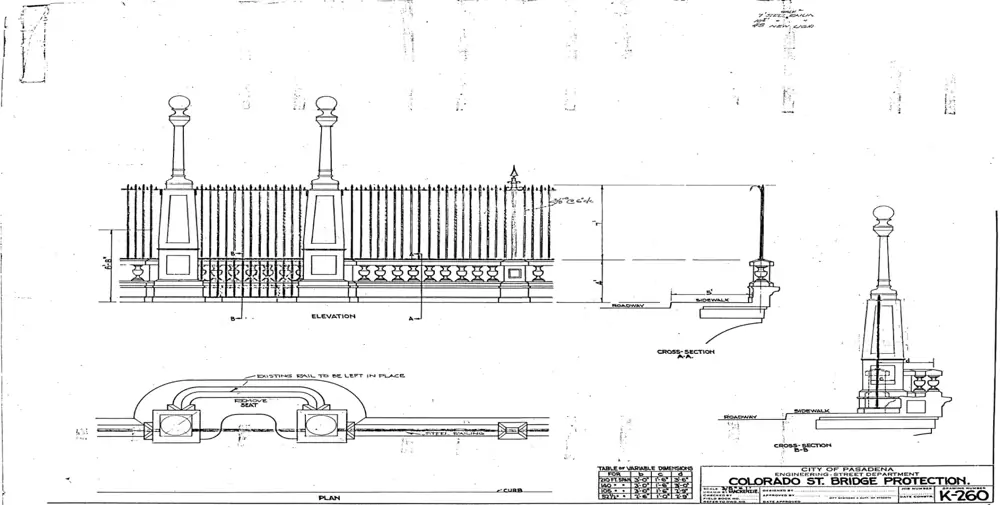
The presentation also put those deaths in a longer context. It reported more than 150 deaths by suicide at the bridge since 1919, including an estimated 79 during the 1930s. It showed fencing and netting designs the City had drawn up around 1932 and said a police detail at the bridge during that decade cost $20,000 a year.2
Fence proposal · circa 1932
Netting proposal · circa 1932
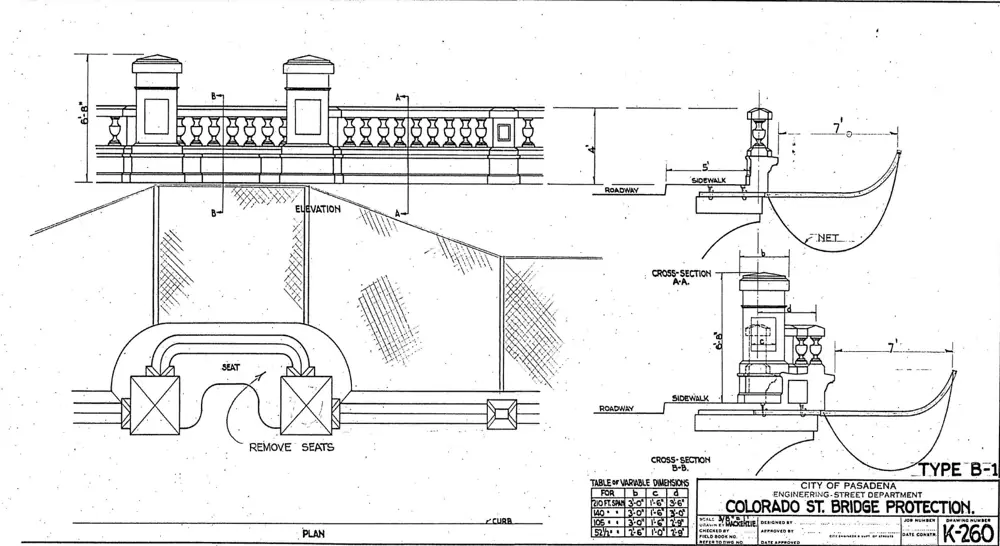
Figure 2. City engineering proposals reproduced in the 2017 presentation. These drawings show proposed designs, not installed conditions.
Even then, a barrier did not come quickly. A Glendale News-Press account said Pasadena moved slowly amid concerns about how safety measures would affect the bridge’s appearance, and the City did not install a 7½-foot mesh fence topped with barbed wire until 1937. Writing in 1992, the Los Angeles Times reported no deaths by suicide from the bridge during the two years after the fence was installed. Deaths later resumed, but the newspaper said no single year had again reached the levels recorded during the 1930s.35
That fence was later replaced. By 1956, Pasadena had installed an iron barrier that curved toward the sidewalk, and that work removed the bridge’s original concrete railing and seating alcoves. In 1989, the City was planning an earthquake retrofit of the bridge. The Los Angeles Times reported that the project would include reworking the iron barrier to reduce what it described as a “tunnel effect.” The City completed the retrofit in 1993, rebuilding the historic concrete railing and seating alcoves and installing wrought-iron fencing above the railing.2,36
Mesh fence · 1937 Inward-curving railing · 1988
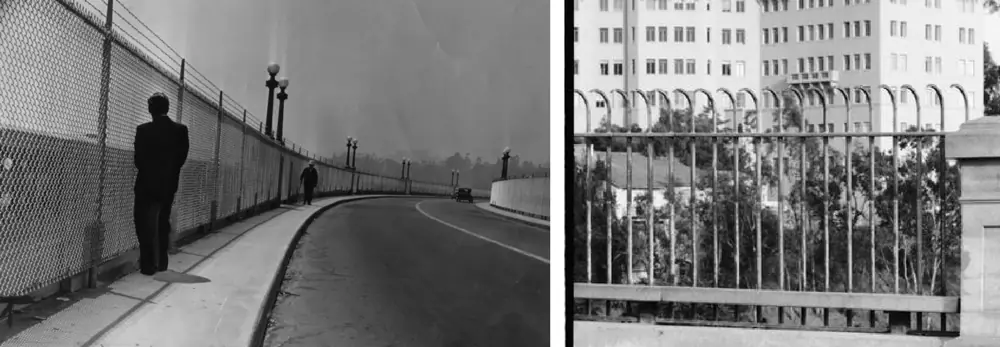
Figure 3. The mesh fence topped with barbed wire in 1937 and an enlarged detail of the iron railing in 1988. Los Angeles Public Library / Tavo Olmos, Historic American Engineering Record.
That was the bridge the committee was considering in 2017. Staff said the rebuilt concrete railing and safety barrier together stood nearly eight feet high. But the way they fit together created footholds that reduced the effective barrier height to about four feet. Staff also identified all 20 restored alcoves and both ends of the bridge as places where people could climb over or get around the barrier.2,5,36
The presentation explained why closing those gaps could save lives. It also addressed a question that kept returning in later meetings. Would a barrier prevent a death or simply move it elsewhere? Interrupting an attempt, it explained, could give an immediate suicidal crisis time to ease. Someone stopped at one bridge wouldn’t necessarily die by suicide elsewhere. 2, 7, 14, 19
According to the official minutes of the July 19 meeting, Mayor Terry Tornek supported emergency fencing at the bridge’s alcoves, recommended continuing it along the bridge’s ends and approaches, and asked staff to work with local architects and engineers on a response that would be effective, cost-effective, and aesthetically pleasing. Vice Mayor John J. Kennedy, who chaired the committee, supported the alcove fencing as an emergency measure and said it would give the City time to find a more permanent solution. Councilmember Tyron Hampton supported planting trees below the bridge, as several public speakers had suggested, along with fencing at its ends and approaches, cameras, and patrols.2
Pasadena’s response began with those restored alcoves, 20 semicircular seating areas that extended from the walkway and offered places to pause and look out over the Arroyo.2,36 The City fenced them first in 2017.4,5
Restored seating alcove Temporary alcove fence · 2017
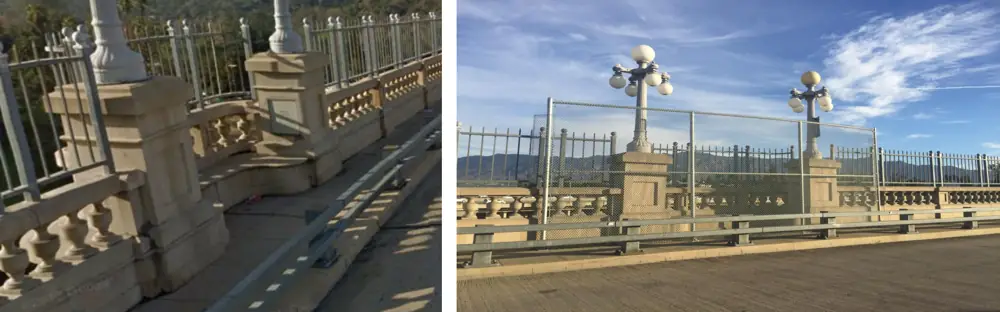
Figure 4. A restored alcove before fencing, and temporary alcove fencing completed in July 2017. City of Pasadena presentation. Photograph dates unstated. The precise alcove locations are unconfirmed.
Later in 2017, Public Works Director Ara Maloyan brought together a task force to study what the City should do next. The group included the City’s health officer and public health director, a suicide-prevention specialist from Didi Hirsch Mental Health Services, Police, Fire, architects, engineers, and preservation advocates.5,9
The task force considered physical barriers, netting, patrols, cameras, motion sensors, crisis phones, signs, lighting, and changes to landscaping and railings. One suggestion was to plant hedges below the bridge to spell “HOPE.” Some ideas were meant to keep a person from reaching the edge. Others were meant to make an intervention more likely.5,7
Some of those broad choices were not new. More than 80 years earlier, Pasadena had considered fencing, netting, and a police presence, and the bridge’s appearance had been a concern then as well.2,35 This time, the City moved quickly to put temporary fencing around the alcoves, but choosing a permanent barrier design would take much longer.2,4,28
Over Labor Day weekend in 2018, first responders spent 13 hours helping a person return to safety. Afterward, the City Manager issued an emergency purchase order for temporary fencing 10 feet high along the bridge’s full length.4,28
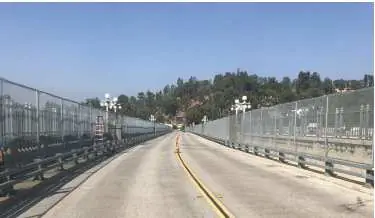
Figure 5. Temporary chain-link fencing along both sides of the bridge, as shown in the City’s November 2019 presentation. City of Pasadena.
A Police Department table presented to the committee in 2021 recorded 10 deaths in 2017, before the full-length fence, and four in 2018, the year it was installed. In the years that followed, it recorded one in 2019, none in 2020, and one through June 13, 2021. Pasadena Now quoted then-City Manager Steve Mermell in September 2018 as saying that nine people had died at the bridge in 2017. The difference remains unexplained. The available records do not provide a complete year-by-year count for recent years.3
A barrier can save a life by creating time. An immediate suicidal crisis can be brief, even when a person’s distress has lasted much longer. A barrier can delay or interrupt an attempt, giving the immediate crisis time to ease and first responders time to arrive. A physical barrier begins providing protection before anyone has noticed the crisis or arrived to help.5,19,29
The full-length fence changed the bridge’s appearance and restricted access. Lower death counts followed its installation. The temporary fence remained in place as Pasadena continued reviewing permanent designs.3,4,28