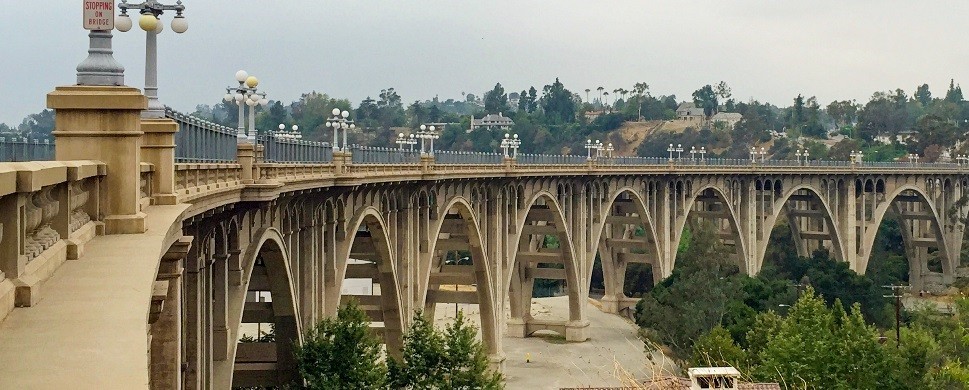
Colorado Street BridgeWho said what

Questions, answers, and decisions

Read selected exchanges in date order, with their background, responses, and supporting records.

Jump to a date (10)

Roles are given as of each meeting. Times locate the start of a passage. How I use recordings, captions, and written records

All speakers

75 entries · oldest first

I chose passages about decisions, alternatives, and timing, including those that support or challenge my conclusions.

April 23, 2018

City Council

Meeting documents →

Ara MaloyanPublic Works director

Design and direction

Presenting the task-force alternatives review

Discussion summary

Maloyan presented the task-force recommendations following its comparison of physical barriers, netting, planting, patrols, technology, and self-help measures.

Its recommendation centered on restricting access at the bridge edge while allowing complementary measures.

Background

The group had gathered public suggestions and compared options using safety, appearance, environmental, rescue, and implementation considerations.

Sources

Ara MaloyanPublic Works director

Landscaping

Explaining the limits on planting below the bridge

Discussion summary

The Public Works presentation identified roughly 20 percent of the span where trees could not be planted.

The written recommendation treated planting as a possible supplement to a vertical barrier.

Background

The task-force report had found no verifying data for the proposed cushioning or deterrence role and had considered the time needed for trees to mature.

Sources

Gene MasudaCouncilmember

Design and direction

Asking whether pedestrian access could be prohibited

Discussion summary

Masuda asked whether pedestrians could simply be prohibited from the bridge.

Maloyan answered that a pedestrian ban would not prevent access without closing the bridge to vehicle traffic as well, which he called impossible.

Sources

Margaret McAustinCouncilmember

Design and direction

Asking what the consultant would actually study

Discussion summary

McAustin asked what work the design consultant would undertake, then asked at 01:22:55 whether a range of options would be developed.

Maloyan answered at 01:20:58 that the next phase concerned vertical barriers and at 01:23:11 that different designs would return for community review.

Background

The task force had already compared intervention types and recommended a vertical barrier with end treatments.

Sources

Andy WilsonCouncilmember

Effectiveness and whether deaths move elsewhere

Asking whether deaths would move elsewhere

Discussion summary

Wilson asked whether restricting access at this bridge would simply move the problem to another location.

Mermell joined the discussion at 01:25:58. Wilson called on Public Health at 01:26:46, and Michael Johnson began answering at 01:27:14.

Sources

Michael JohnsonPublic Health director

Effectiveness and whether deaths move elsewhere

Would deaths fall overall or move elsewhere?

Discussion summary

Johnson described research suggesting that barriers at bridges known for suicide could reduce broader deaths rather than merely shift them elsewhere.

Johnson answered the follow-up at 01:31:51 and referred to Toronto research at 01:32:15.

Background

Wilson had asked whether deaths would move to another location. Gordo followed with a question about deaths across the region at 01:31:15.

Sources

Victor GordoCouncilmember

Effectiveness and whether deaths move elsewhere

Would deaths fall across the region or move elsewhere?

Discussion summary

Gordo asked whether a bridge barrier would reduce deaths across the region or simply change where they occurred. He then asked about the supporting study.

Johnson said the research showed an overall decline after barriers were installed and referred to a Toronto study.

Background

Earlier in the same discussion, Wilson had asked whether deaths would move to another location. Public Health Director Michael Johnson had begun explaining the research.

Sources

Terry TornekMayor

Design and direction

Anticipating a harder design debate

Working-transcript excerpt

“This is probably the highest level of consensus we’ll achieve in this process, I predict.”

Tornek predicted that agreement would become more difficult once specific designs were presented.

Background

The Council had heard the task-force recommendation, questions about effectiveness, and the scope of the next design phase.

Sources

April 2018 working transcript.

Steve MadisonCouncilmember

Design and direction

Moving the permanent-barrier recommendation

Discussion summary

Madison moved approval of the task-force recommendation. Hampton seconded it, and the Council approved it unanimously.

The adopted direction centered on a permanent physical barrier. The detailed design still had to be developed.

Background

The multidisciplinary task force had considered physical and complementary measures, including netting, landscaping, staffing, and technology.

Sources

Council minutes, page 5. The recording time locates the motion and approval.

Tyron HamptonCouncilmember

Design and direction

Supporting the barrier direction and interim fencing

Discussion summary

The official minutes record Hampton’s request to consider temporary fencing at the bridge’s ends and approaches until an approved design could be built. He also seconded the staff recommendation.

The Council unanimously approved the recommendation moved by Madison.

Background

The task force recommended physical protection while treating other measures as possible supplements.

Sources

Council minutes, page 5, document the request and second. The recording time locates the motion and approval. Hampton’s temporary-fencing request is documented in the minutes.

June 18, 2018

Published interview

Sue MossmanPasadena Heritage

Design and direction

Describing the preservation and safety tradeoff

Written-record summary

In a 2018 interview, Mossman discussed the difficulty of protecting people while respecting the bridge’s historic design.

Later The 2021 committee minutes later record her appreciation for the staff and design team, the lack of task-force consensus on the designs, and her call for further exploration.

Sources

June 18, 2018 Los Angeles magazine interview. The August 2021 minutes and Winter 2026 column provide later context.

April 17, 2019

Public Safety Committee

Meeting documents →

Terry TornekMayor

Design and direction

Asking for a shorter consultant schedule

Written-record summary

The April 2019 minutes record Tornek’s concern that the proposed schedule was too slow given the urgency of the issue.

Madison cautioned about rushing a historic-landmark project but supported a revised schedule, budget review, and grant search.

Background

The City had set aside design money in 2018 and completed a consultant solicitation and interviews.

Sources

April 17 and May 15, 2019 committee minutes. Recordings were unavailable for review.

May 20, 2019

City Council

Meeting documents →

Andy WilsonCouncilmember

Design and direction

Calling attention to the length of the project

Quotation

“almost a four or five year project”

Wilson called attention to the project’s length, even after staff shortened the proposed design schedule.

Staff reported a ten-month shorter design period and a contract reduction from $700,000 to $500,000. Construction was expected around August 2020, provided the City approved additional construction funding.

Background

The April committee had asked staff to revisit the schedule and budget.

Sources

The Council report supplies the schedule and contract changes.

February 3, 2020

Public Safety Committee

Meeting documents →

John J. KennedyCouncilmember

Design and direction

Requesting a fuller enclosure comparison

Written-record summary

The February 2020 minutes record Kennedy’s request for cost information on an enclosure option.

Staff and the design consultant were asked to return with a fuller comparison.

Background

The first design cycle was developing a permanent barrier after the Council’s 2018 policy direction.

Later The August 2021 presentation included a refined enclosure concept and a design-goal comparison.

Sources

City Clerk-supplied minutes, pages 2–3. The City Clerk’s Department reported that it did not have a recording.

August 18, 2021

Public Safety Committee

Meeting documents →

Kris MarkarianPublic Works

Design and direction

Explaining a pandemic procurement and fabrication delay

Discussion summary

Markarian described delays obtaining materials and fabricating the mockups during the pandemic.

Sources

Checked against the recording at 00:14:14–00:14:32.

Steve LineDesign consultant

Design and direction

Comparing the refined enclosure against design goals

Discussion summary

Line compared the developed concepts, including a refined enclosure, against the project’s design goals.

The presentation compared safety, appearance, and the relationship to the historic bridge.

Background

Kennedy had requested a fuller enclosure cost comparison in February 2020. The design team subsequently developed more detail.

Sources

Steve MadisonCouncilmember

Effectiveness and whether deaths move elsewhere

Explaining why interrupting access can matter

Caption excerpt

“really disruptive action is required to be able to prevent the suicide”

Madison discussed Malcolm Gladwell’s account of coupling between a place and a method and explained why disrupting that relationship mattered to the bridge.

Madison treated prevention as an important goal while also saying the permanent design was not ready for a decision.

Background

Public Health had addressed regional effects and substitution during the April 2018 Council discussion.

Sources

Steve MadisonCouncilmember

Design and direction

Narrow to two choices, then seek more input

Caption excerpt

“what we should try to do is get down to two choices”

Madison said the City had either not found the right solution or had not had enough process to identify it. He proposed narrowing the alternatives before returning to the community.

Gordo later said he was not ready even to narrow the process and asked for more options.

Sources

John J. KennedyCouncilmember

Design and direction

Narrowing the options and seeking local expertise

Quotation

“one last time out”

Kennedy supported narrowing the options and placing the project on a timetable. He also supported another opportunity for local expertise to contribute to the two-option approach Madison had discussed.

Sources

Victor GordoMayor

Effectiveness and whether deaths move elsewhere

The temporary fence and the bridge’s reputation

Quotation

“the decoupling, if you will, has started”

Gordo picked up Madison’s discussion of place and method. He said the temporary structure appeared to be discouraging people from using the bridge to harm themselves.

He also said the work remained incomplete.

Background

Madison had discussed the relationship between a particular place, an immediate crisis, and access to a method. The temporary fence had been installed in 2018.

Sources

Victor GordoMayor

Design and direction

More options and another round of public input

Caption excerpt

“we ought to send this back for more community input”

Gordo said he was not ready to narrow the permanent designs. He discussed different materials and further consideration of the enclosure concept.

Background

The 2018 policy direction, the first design cycle, and commission review preceded this request. Madison had proposed reducing the field to two choices.

Sources

Tyron HamptonCouncilmember

Design and direction

Further consideration in 2021

Quotation

“get this right”

Hampton said the temporary structure was working and continued considering alternatives for a permanent approach. His proposal for around-the-clock staffing followed at 01:26:44.

Hampton praised staff’s work, supported further consideration, and asked whether an enclosure could take a form more compatible with the historic bridge.

Background

The meeting followed commission review and full-scale mockups. Staff had also developed an enclosure concept in response to earlier direction.

Sources

Tyron HamptonCouncilmember

Staffing and patrol

Asking whether the bridge could be staffed around the clock

Caption excerpt

“Has that ever even come up?”

Hampton asked whether staffing the bridge for 24 hours had been considered and what two-person coverage would cost.

Mermell said staffing had been suggested before, gave a rough annual cost in the hundreds of thousands, and questioned its feasibility. He favored retaining the temporary fence until another solution was ready.

Sources

Steve MermellCity manager

Staffing and patrol

Responding to the proposal for around-the-clock staffing

Discussion summary

Mermell said staffing had been suggested before, would likely cost several hundred thousand dollars annually, and was not feasible as a replacement for physical protection.

The discussion continued with Gordo’s Host/Guide-style idea and questions about how staff could intervene.

Background

Hampton had proposed staffing the bridge 24 hours a day at 01:26:44.

Sources

Victor GordoMayor

Staffing and patrol

A host or guide model for the bridge

Caption excerpt

“I don’t think we should dismiss outright the concept of achieving our goal of suicide prevention by manning the bridge”

Gordo drew on the Old Pasadena host or guide program and suggested personnel who could observe, report, and offer historical information.

Madison discussed visibility, the size of the bridge, incident timing, and whether personnel should physically intervene.

Background

Mermell had just said staffing was previously suggested and questioned its feasibility as the solution.

Sources

Steve MadisonCouncilmember

Staffing and patrol

The practical limits of intervention by personnel

Caption excerpt

“the efficacy of it is really hard to to predict”

Madison said he had discussed staffing with residents and staff. He questioned whether personnel would be in the right place and able to act when needed.

Madison identified the bridge’s length, curvature, two sides, and varied incident timing. The discussion also raised the limits of physical intervention and liability.

Background

Hampton had asked about continuous staffing, Mermell had responded, and Gordo had proposed a host or guide model.

Later The same practical issue returned when Madison described rapidly unfolding incidents in November 2023.

Sources

John J. KennedyCouncilmember

Staffing and patrol

Staffing, liability, and further review

Quotation

“get it right”

Kennedy’s preceding discussion, beginning at 01:39:01, raised liability and intervention concerns about staffing. He acknowledged the effort to save lives while questioning how personnel could safely intervene.

Background

Hampton had proposed continuous staffing, and Gordo had suggested a host or guide model.

Sources

Steve MermellCity manager

Design and direction

Explaining why a three-month return was too aggressive

Caption excerpt

“I do think three months is probably too aggressive.”

In his closing summary, Mermell described the further work needed before the project could return to the committee.

He connected the return schedule to the work now being requested. The temporary fence would remain during that process.

Background

Committee members had asked for more design work, additional expertise, and further consideration of staffing.

Sources

Victor GordoMayor

Staffing and patrol

Clarifying a combined physical and staffing approach

Caption excerpt

“maybe it’s a hybrid”

Gordo clarified that his interest in staffing could involve combining it with a physical design and the more transparent material shown that evening.

Mermell’s closing summary called for consultation with the design team and a further timetable. He said a three-month return was probably too aggressive.

Background

Staff and committee members had discussed coverage, intervention, cost, and liability concerns.

Sources

November 15, 2023

Public Safety Committee

Meeting documents →

Steve MadisonCouncilmember

Design and direction

Safety and the bridge’s appearance

Quotation

“elevate human safety over aesthetics and objects”

Madison said the proposed designs would change the bridge’s appearance. He also said that a solution achieving both safety and preservation goals would be more successful.

Staff described rescue, maintenance, and preservation concerns associated with horizontal netting. The later exchange addressed landscaping and the bridge’s geometry.

Background

The Council had directed a vertical-barrier design process in April 2018. A first design cycle and full-scale mockups preceded the three new concepts presented in 2023.

Sources

Steve MadisonCouncilmember

Landscaping

Returning to trees and shrubs below the bridge

Caption excerpt

“have we looked at even solutions as simple as, you know, thick trees and shrubs and bushes that would then break a fall?”

Madison asked about landscaping as a cushioning or deterrent measure while exploring a combination of approaches.

Markarian said the task force had examined landscaping and researched measures elsewhere. Staff and the consultant discussed the local geometry, remaining fall distance, structural demands, and appearance of netting.

Background

The April 2018 report said no verifying scientific data had been found for that role. About one-fifth of the span, including its highest point, could not be planted. It treated trees as a possible supplement.

Sources

Steve MadisonCouncilmember

Design and direction

Declining to support the three proposed designs

Caption excerpt

“I don’t think I could support any of these options”

After the discussion of netting and landscaping, Madison said a substantial change in community sentiment would be needed for him to support one of the designs. He had suggested the temporary fence might be preferable.

Olmos proposed completing commission review, presenting survey results, and returning with additional information about netting and other questions.

Sources

Justin JonesCouncilmember

Design and direction

Asking what other options had been considered

Caption excerpt

“Are there any other options that the working group looked into that you could share with us?”

Jones relayed residents’ concerns about both the existing fence and the proposed permanent designs and asked about other options.

Olmos explained that developing barrier designs was staff’s direction and that the other options had already gone through extensive discussion. Staff could study alternatives again if directed.

Background

The Council had selected a vertical-barrier direction in 2018. Jones was not part of that decision or the 2021 committee discussion.

Sources

Kris MarkarianPublic Works

Staffing and patrol

Explaining why staffing had not been recommended as a replacement

Discussion summary

Markarian said the task force had considered staffing and described the problem of continuous coverage, the bridge’s curve, multiple personnel, liability, and incidents outside ordinary hours.

Gordo asked for a closer look at trained security at night and Park Safety specialists, docents, or volunteers during the day.

Background

Patrol and active intervention had been part of the original alternatives review. Mermell had also addressed a staffing proposal in August 2021.

Later The committee requested more staffing analysis. Staff presented annual cost estimates in July 2024.

Sources

Victor GordoMayor

Staffing and patrol

Revisiting a staffing model

Quotation

“money well spent”

Speaker and passage checked against the recording.

Gordo suggested that people affected by suicidal crises might view a staffing expense of “a couple hundred thousand dollars” this way. He asked staff to revisit the model and return with recommendations.

The later discussion separated immediate response from a possible deterrent effect of human presence.

Background

Gordo had proposed a guide or host model in August 2021. In this meeting, Markarian again described continuous coverage, multiple personnel, liability, and incidents outside ordinary working hours.

Sources

The speaker and timing check covered the handoffs in this exchange.

Steve MadisonCouncilmember

Staffing and patrol

Could stationed personnel respond in time?

Quotation

“unfold in five minutes”

Speaker and passage checked against the recording.

Madison used this phrase while questioning whether personnel stationed along the bridge could reach an incident quickly enough. He had also discussed how capital funds might support an ongoing staffing expense.

Gordo acknowledged the response-time concern but asked whether the presence of personnel could deter an impulsive attempt. Olmos described patrol as a complementary measure.

Background

Madison had raised the bridge’s length, curvature, and unpredictable incident timing during the August 2021 staffing discussion. Markarian had just repeated coverage and liability concerns in 2023.

Sources

The displayed time starts Madison’s passage. The speaker and timing check covered the handoffs in this exchange.

Victor GordoMayor

Staffing and patrol

Requesting expert advice on the deterrent effect of human presence

Caption excerpt

“I would ask that staff talk with professionals, psychologists and psychiatrists to see if in fact that might make a difference”

Gordo distinguished an immediate response from the possibility that a visible human presence might prevent an impulsive attempt from beginning. He asked for professional advice.

Olmos said patrol and technology could enhance a barrier and asked whether to continue the design process or pause.

Background

Markarian had explained the earlier staffing assessment. Madison had just questioned whether personnel could respond quickly enough.

Sources

Tony OlmosPublic Works director

Design and direction

Asking whether staff should continue or pause

Discussion summary

Olmos asked whether staff should continue through the scheduled commission reviews and survey or pause the process.

Jones recommended continuing to the commissions and hearing the survey results at 00:55:35.

Sources

Speaker and passage checked against the recording.

Justin JonesCouncilmember

Design and direction

Continuing commission review and the survey

Caption excerpt

“continue to go to the commissions and then get the results of the survey”

Caption wording. Speaker and passage checked against the recording.

After Olmos asked whether staff should continue or pause, Jones recommended proceeding with commission review and hearing the survey results.

Olmos’s closing proposal also included responses to the committee’s questions and health expertise.

Sources

The recording check located the speaker and passage. Caption times differ slightly.

Justin JonesCouncilmember

Effectiveness and whether deaths move elsewhere

Public Health’s role and whether deaths would move elsewhere

Discussion summary

Jones asked how Public Health had participated and whether blocking access at one bridge could shift attempts to another place. He also raised a broader citywide prevention approach.

Olmos relayed the mental-health specialist’s explanation that interrupting access to a selected bridge would not simply send everyone to the next bridge. Staff agreed to bring health professionals when the project returned.

Background

The Council had discussed substitution with Public Health in April 2018. That earlier answer concerned research, including a Toronto study.

Sources

Tony OlmosPublic Works director

Effectiveness and whether deaths move elsewhere

Agreeing to bring Public Health into the next review

Discussion summary

Olmos responded to questions about Public Health involvement and whether protection at one location moves deaths elsewhere.

Staff agreed to include health professionals when the project returned.

Background

Public Health had discussed regional effects and substitution with the Council in April 2018.

Later A suicide prevention specialist participated in the July 2024 presentation.

Sources

Speaker and passage checked against the recording.

Kris MarkarianPublic Works

Effectiveness and whether deaths move elsewhere

Confirming that a barrier creates time for intervention

Quotation

“Yes, it buys time”

Checked against the recording.

Markarian agreed that a barrier buys time during an incident.

She added that it gives notified first responders time to arrive.

Background

Madison had questioned how quickly personnel could reach someone and how staffing would work without a barrier.

Sources

Steve MadisonCouncilmember

Effectiveness and whether deaths move elsewhere

Asking for Public Health at the next discussion

Caption excerpt

“public health needs to be involved in this discussion”

Madison called for health expertise after Olmos and Markarian explained that a barrier can buy time for a crisis to ease or responders to arrive.

Staff said they had consulted people in the field and proposed bringing health professionals with the survey results and follow-up information.

Background

Public Health and mental-health participants had been involved in the earlier process. Jones had just asked about their role and substitution.

Later The July 2024 meeting included Sandri Kramer of Didi Hirsch, who explained means restriction and the importance of time for intervention.

Sources

Tony OlmosPublic Works director

Design and direction

Setting out the work for the next return

Discussion summary

Olmos proposed continuing the planned meetings and returning with survey results, responses to the committee’s questions, and Public Health and other expert input.

Sources

Speaker and passage at 01:02:09 checked against the recording.

January 9, 2024

Design Commission

Meeting documents →

Julianna DelgadoDesign Commission chair

Netting and rescue

Asking about horizontal and landscape alternatives

Discussion summary

Delgado acknowledged the staff work and asked whether the team had considered horizontal protection or landscaping. She compared the discussion with the Golden Gate Bridge.

An off-camera respondent at 00:42:33 described the earlier alternatives review and the Council’s vertical-barrier direction. The speaker’s name and role remain unidentified.

Background

The 2018 task force had compared netting, landscaping, and vertical barriers. November 2023 staff discussion had again addressed local netting constraints.

Sources

The effectiveness wording at 00:43:59 was manually checked against the recording. The off-camera speaker remains unidentified.

Julianna DelgadoDesign Commission chair

Design and direction

Questioning the earlier Council direction

Discussion summary

Delgado referred to the “previous City Council” while questioning the restriction of the current design work to vertical barriers.

The exchange returned to whether earlier direction should constrain the options now under review. The off-camera respondent’s name and role are not established.

Background

The Council had adopted the task-force recommendation in April 2018.

Sources

Julianna DelgadoDesign Commission chair

Landscaping

Suggesting cacti and relaying a housing suggestion

Working-transcript excerpt

“It could be cacti below it.”

Delgado suggested cacti below the bridge and relayed a public suggestion for an apartment building below it.

A respondent discussed existing bungalows at 00:47:29. The later response, around 00:47:50, returned to the safety reason for keeping people on the bridge deck. The respondent remains unidentified.

Background

The task-force report had found no verifying data for trees as a cushion or deterrent and identified portions of the bridge where planting was not possible. It allowed a possible supplemental role.

Sources

Julianna DelgadoDesign Commission chair

Design and direction

Objecting to all three presented designs

Caption excerpt

“I’m having a problem too with all three of these solutions”

Delgado discussed the proposed designs’ materials, appearance, and relationship to the bridge.

Background

The replacement design team had developed three concepts through the 2023 review process.

Sources

July 17, 2024

Public Safety Committee

Meeting documents →

Kris MarkarianPublic Works

Netting and rescue

Identifying unfinished engineering questions about netting

Discussion summary

Markarian explained that structural connections had not been designed and that further studies were needed to determine whether modifications to the bridge would be required.

Sources

Checked against the recording at 00:27:24–00:27:57.

Chad AugustinFire chief

Netting and rescue

Explaining the rescue concerns with horizontal netting

Discussion summary

Augustin discussed the safety of the person in crisis and responding crews, access to a net, the use of two ladder trucks, extended operations, and training requirements.

At approximately 00:35:48, he said he could not recommend horizontal netting from a public-safety standpoint.

Background

The City had consulted about netting and developed a preliminary local engineering assessment.

Sources

Sandri KramerSuicide prevention specialist

Effectiveness and whether deaths move elsewhere

Explaining the need for public education about prevention

Quotation

“public education issue”

Kramer described a public education issue in understanding suicide prevention and the role of barriers in creating time for intervention.

Her discussion placed intervention time and the impact on responders alongside the project’s engineering and design questions.

Background

The survey had shown uncertainty about both the need for a vertical barrier and whether it would work.

Sources

Quoted phrase checked in City-hosted captions.

Kris MarkarianPublic Works

Netting and rescue

Reporting the expert recommendation against a local net

Discussion summary

Markarian reported a unanimous expert-review recommendation against horizontal netting as a viable measure at this bridge.

Background

The presentation had covered local structure, bridge geometry, rescue access, and consultation about Golden Gate.

Sources

Tyron HamptonCouncilmember

Design and direction

Asking for a faster return

Working-transcript excerpt

“I think that time is of the essence.”

Hampton asked for direction and a return to the committee in roughly 90 days rather than early the following year.

Background

The proposed schedule anticipated further design work, public feedback, commission review, and a return to Public Safety early in 2025.

Sources

The minutes also document the 90-day request.

Tyron HamptonCouncilmember

Design and direction

Naming vertical mesh as a preferred design

Caption excerpt

“I think the vertical mesh is the most ideal”

Hampton identified vertical mesh as his preference and discussed its appearance and the bridge’s public identity.

He also asked staff to return sooner and suggested cameras and motion detectors.

Background

Staff’s remaining concepts were vertical webmesh and metal pickets. The committee also had the fuller netting, patrol, and prevention review.

Sources

Tyron HamptonCouncilmember

Technology

Cameras and motion detection as added protection

Caption excerpt

“we need to put cameras up on the bridge with motion detectors”

Hampton proposed camera and sensor alerts to Police as an addition to the vertical mesh he had just preferred.

The meeting’s later staff response treated technology as a potential complement to physical protection and raised operational concerns.

Background

The task force had considered technology, and the July presentation returned with further technology analysis.

Sources

Steve MadisonCouncilmember

Design and direction

Human life and safety

Working-transcript excerpt

“we have to elevate human life and human safety over really objects of any kind”

Madison expressed sympathy to a family and recalled why the emergency fence had been installed. He remained uncertain that the proposed permanent designs had sufficiently changed.

Madison also acknowledged public-safety concerns about netting while asking whether the City had exhausted alternatives.

Background

The July presentation returned with patrol costs, technology analysis, netting and rescue review, Golden Gate consultation, survey results, and prevention expertise requested during earlier discussions.

Sources

Steve MadisonCouncilmember

Design and direction

Have all the options been exhausted?

Quotation

“Do you feel like we’ve really done our level best to exhaust all the feasible options?”

Checked against the recording.

At 01:06:24, Madison said leadership sometimes requires proceeding without a great option. At 01:06:35, he asked Markarian whether the City had exhausted the feasible options. The broader discussion included ground cover, combined measures, and consultation with Caltech.

Beginning at 01:06:45, Markarian described more than seven years on the project and experts with different perspectives. She said, “we have truly exhausted various mitigation measures,” then discussed the Golden Gate comparison. In the later ground-cover exchange, she explained why the fall distance limited measures at ground level.

Background

Landscaping had been addressed by the 2018 task force and again in November 2023. The July meeting returned with the requested wider engineering and rescue review.

Sources

Question wording and exchange times manually checked September 22, 2026: leadership prelude at 01:06:24, question at 01:06:35, and the start of Markarian’s answer at 01:06:45.

Kris MarkarianPublic Works

Design and direction

Responding when below-bridge alternatives returned

Quotation

“we have truly exhausted various mitigation measures”

Checked against the recording.

Madison asked at 01:06:35 whether the City had exhausted all the feasible options. Markarian’s answer began at 01:06:45. She described more than seven years on the project and experts from different backgrounds and perspectives, then discussed the Golden Gate comparison.

Her answer emphasized the work already performed. The continuing discussion still included questions about particular below-bridge arrangements.

Background

The earlier task-force report had assessed landscaping. The current presentation had also returned to netting, rescue, staffing, and technology.

Sources

Quoted wording and exchange times manually checked September 22, 2026. The displayed 01:06:45 locates the start of Markarian’s answer. Her introductory account and the Golden Gate discussion are summarized.

Victor GordoMayor

Netting and rescue

Clarifying which design raised Fire’s rescue concerns

Discussion summary

Gordo asked whether Fire’s concern about risks to people and responders applied to vertical mesh.

Fire clarified that the concern was about horizontal netting and explicitly supported a vertical barrier. Gordo acknowledged the clarification.

Background

Fire’s earlier presentation had discussed the difficulties of rescues involving a horizontal net.

Sources

City captions, 01:08:36–01:09:40. The speaker is identified from the address to the mayor.

Chad AugustinFire chief

Netting and rescue

Clarifying support for a vertical barrier

Caption excerpt

“we absolutely are in support of a barrier”

Augustin clarified that Fire’s concern was with horizontal netting and that the department supported a vertical barrier.

Background

Gordo’s preceding question had raised the netting and rescue issue. Staff had already explained the local rescue difficulties.

Sources

Steve MadisonCouncilmember

Netting and rescue

Asking about layered netting and its effectiveness

Caption excerpt

“I think my question was more about the efficacy and whether it was considered”

Madison proposed more than one layer of netting with ground cover. After hearing about cost and engineering complexity, he said his question concerned effectiveness and whether the idea had been considered.

Markarian described the added structural reach. The architect described cost, appearance, and engineering complexity and said the concept was not impossible.

Background

The committee had received the site-specific review of a horizontal net and Fire’s rescue concerns. Earlier landscaping findings did not evaluate this exact layered configuration.

Sources

Victor GordoMayor

Technology

Requesting a closer look at remote intervention

Caption excerpt

“I’d ask the experts to look at that technology”

Gordo described monitored cameras with speakers that could allow a trained person to engage someone on the bridge in real time.

In the following exchange with Jones, Markarian described such measures as complements, discussed operational limits, and questioned their effectiveness alone.

Background

Technology and staffing had been studied previously and revisited after the November 2023 discussion. Hampton had also just suggested cameras and motion detection.

Sources

Justin JonesCouncilmember

Staffing and patrol

Patrol: cost, effectiveness, or both?

Discussion summary

Jones asked whether staff’s recommendation against continuous patrol was based on its cost or its effectiveness.

Markarian said both cost and effectiveness were concerns, along with liability and training. She distinguished measures that might help from a replacement for physical protection.

Background

The committee had requested further staffing analysis in November 2023. The July presentation estimated roughly $600,000 annually for private security and $1.16 million for law-enforcement coverage.

Sources

Justin JonesCouncilmember

Netting and rescue

Was any expert recommending horizontal netting?

Discussion summary

Jones asked whether any expert or task-force participant was recommending horizontal netting.

Markarian answered that horizontal netting was unanimously not recommended.

Background

The July meeting had presented the expanded engineering and rescue review. Fire had explained why it could not recommend a net from a public-safety standpoint.

Sources

Justin JonesCouncilmember

Design and direction

Pursuing one of the two remaining designs

Quotation

“I would be in favor of moving forward with pursuing one of these two options and being able to develop a plan and come back to us.”

Checked against the recording.

Jones had asked whether patrol was ruled out because of cost, effectiveness, or both, and whether any expert had recommended horizontal netting. Staff answered both on patrol and said the recommendation against netting was unanimous.

He proposed using the feedback to refine components and variations and return with a plan.

Sources

Checked against the recording at 01:18:55–01:19:30.

Tyron HamptonCouncilmember

Staffing and patrol

Returning to netting and continuous patrol

Caption excerpt

“I still think that those are factors that we should put out”

Hampton said he had raised horizontal netting and continuous patrol at the previous meeting and still wanted them considered, while acknowledging cost.

Hampton moved on to ask Fire about rescue cushions and whether a higher-capacity version existed.

Background

Jones had just asked about patrol and the netting recommendation. Markarian had given the reasons against patrol as a substitute and said the netting recommendation was unanimous.

Sources

Chad AugustinFire chief

Netting and rescue

Describing the rescue cushion’s operational limits

Discussion summary

Augustin described a roughly 100-foot cushion rating, bridge portions reaching roughly 150 feet, and constraints on positioning equipment below the bridge.

Hampton then asked whether higher-capacity equipment existed. Fire did not know and agreed to investigate.

Later The May 2026 Fire equipment list names a cushion but supplies no rating.

Sources

Tyron HamptonCouncilmember

Netting and rescue

A higher-capacity rescue cushion: a new unanswered question

Discussion summary

After Fire described the limits of its rescue cushion, Hampton asked whether equipment rated for a greater height existed.

Fire did not know whether a higher-capacity cushion was available and agreed to investigate.

Background

Fire had said its cushion was rated for roughly 100 feet, while portions of the bridge reached roughly 150 feet, with positioning constraints below.

Later A May 2026 presentation listed a rescue cushion without a capacity rating, so it did not resolve the question.

Sources

Tyron HamptonCouncilmember

Netting and rescue

Keeping horizontal netting in consideration

Working-transcript excerpt

“the horizontal wouldn’t be an idea I’d tell you to completely cancel out”

Later in the same meeting, Hampton continued to favor considering horizontal netting after staff’s recommendation against it and Fire’s explanation of rescue concerns. He described it as the most attractive-looking option.

He also said the project needed to move forward. The higher-capacity rescue-cushion question remained unanswered.

Background

The expert review had not recommended horizontal netting. Fire had explained rescue and resource concerns, and staff had just repeated that the recommendation was unanimous.

Sources

April 20, 2026

Finance Committee / City Council

Meeting documents →

Matt HawkesworthActing city manager

Funding and project costs

Considering other uses for unspent Bridge money

Discussion summary

Hawkesworth raised the possibility of redirecting unspent Bridge money to other priorities. He also said the City had made a shortlist for a possible $4.5 million federal earmark in the next budget cycle.

Public Works Director Greg de Vinck responded that redirecting the remaining money would leave the City without the matching funds needed for the shortlisted application.

Background

The Council had funded the design-phase project. Two approved transfers in 2025 had reduced its budget to $2,874,000. Construction required separate funding.

Sources

Speaker and passage at approximately 00:08:10 checked against the recording.

Greg de VinckPublic Works director

Funding and project costs

Explaining why the remaining money mattered to a funding application

Discussion summary

de Vinck described a shortlisted grant application and said redirecting the Bridge money would leave Pasadena without the required matching funds.

The April available-balance sheet associates project 73324 with $1,336,791 and a note about retaining funds for a match and final design. The sheet gives no program name, matching amount, or calculation of the balance.

Background

Hawkesworth had just raised possible reallocation and described a $4.5 million federal earmark shortlist.

Sources

Speaker and passage at approximately 00:09:15 checked against the recording. The project row in the April 20 supplemental sheet, page 2, was checked September 21, 2026.

Rick ColeCouncilmember

Funding and project costs

Asking what had been spent and what the remaining money would finish

Discussion summary

Cole asked how much Pasadena had already spent and whether the remaining money would pay for a completed barrier.

City Engineer Brent Maue said the remaining money was expected to finish design. Staff described about $1.5 million spent, about $1.3 million remaining for design, and a separate construction estimate of roughly $4 million.

Background

The meeting’s earlier discussion had addressed possible reallocation and matching funds. The design-phase account also covered earlier fencing, maintenance, mockups, environmental assessment, and outreach.

Sources

Speaker and passage at approximately 01:59:13 checked against the recording. Spending and balance figures in this exchange are rounded oral estimates.

Brent MaueCity engineer

Funding and project costs

Distinguishing the cost of finishing design from building the barrier

Discussion summary

Maue said the remaining balance was expected to finish design. He then gave a construction estimate of roughly $4 million at 02:00:54 and discussed the $4.5 million shortlist at 02:01:11.

April’s federal program remains unidentified. Its relationship to Rep. Chu’s published $4 million request is unresolved.

Background

Cole had asked whether the money left in the project account would deliver a finished barrier. Earlier in the meeting, staff had raised the need to retain matching funds.

Sources

Speaker and passages checked against the recording: design balance at 02:00:24, construction estimate at 02:00:54, and federal shortlist at 02:01:11.